Skip to product information
1 of 20

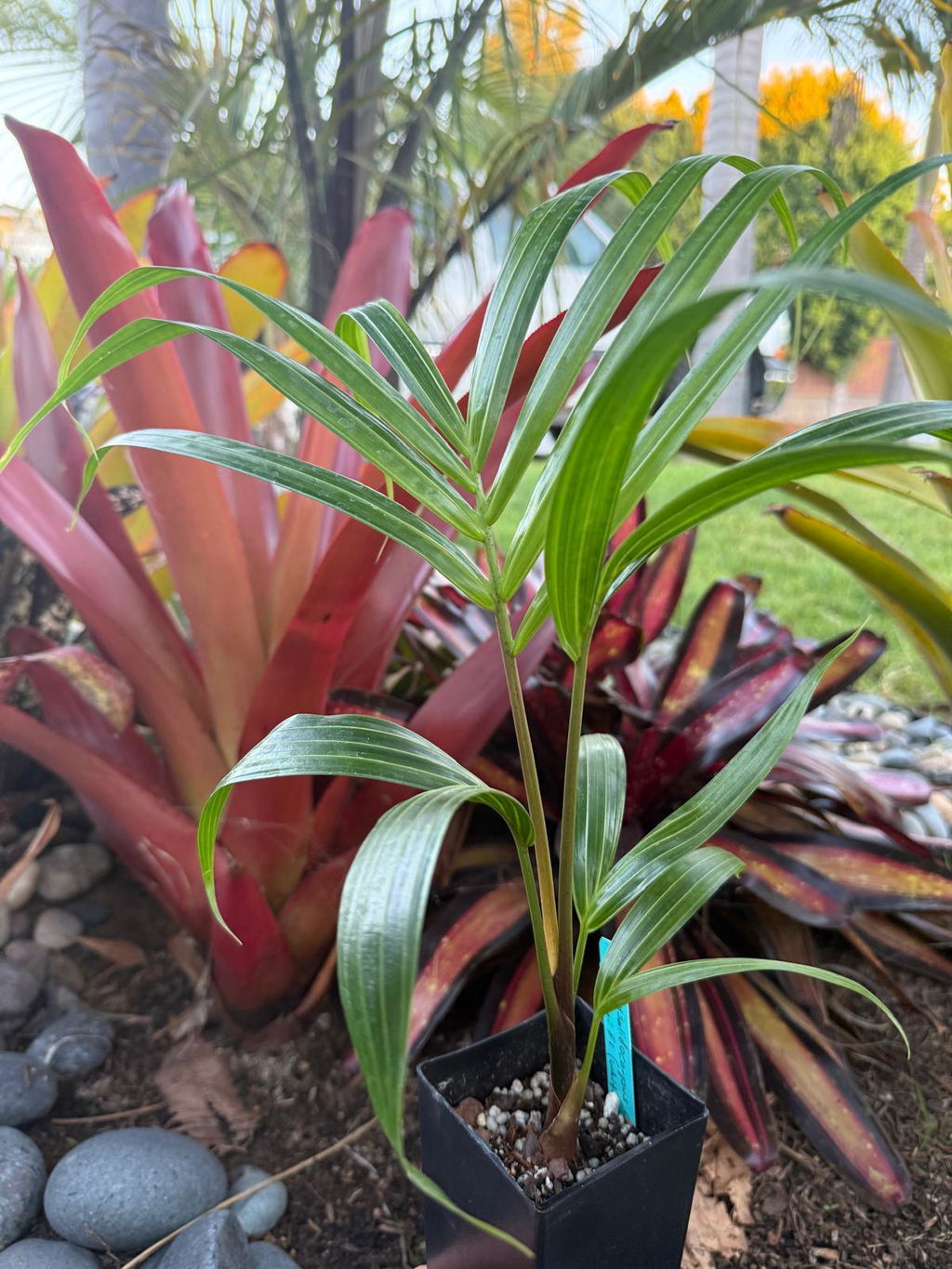
White Triangle Palm (Chrysalidocarpus cabadae x decaryi; Dypsis cabadae x decaryi)

White Triangle Palm (Chrysalidocarpus cabadae x decaryi; Dypsis cabadae x decaryi)

Regular price $499.95 USD
Regular price Sale price $499.95 USD
Sale Waiting to restock
Shipping calculated at checkout.

Out of stock

Size
Quantity

Palm Tree Details

3x8 Treepots available February 2026.  3gal available May/June 2026.  Click "Notify Me When Available" to get on our waiting list.  You will be automatically notified by email as soon as the status changes to "In-Stock".

Sun: Full Sun

Growth Rate: Moderate to Fast

Fertilizer: Low

Water: Low

Cold Tolerance: 30degF

History: This hybrid is likely the tree labeled as Dypsis sp. ‘White Triangle’ on the website PACSOA.org.au which is likely its genesis amongst collector circles. Thus, it has probably been produced accidentally in the various Australian Chrysalidocarpus cabadae farming operations for seed production when bees accidentally carry Chrysalidocarpus decaryi pollen from a neighboring tree. These hybrids have made their way State-side visa vie Hawaii and Thailand. Now, they are being grown in gardens of those lucky enough to get their hands on them. There are an estimated two to three dozen in cultivation. They are not believed to be produced by manual cross-pollination, except possibly by Nong Nooch Botanical Gardens in Thailand in the 1990’s and early 2000’s.

Production: The seed parent is Chrysalidocarpus cabadae (Cabada Palm) and the pollen parent is Chrysalidocarpus decaryi (Triangle Palm). Natural (accidental) pollination by honey bees or flies probably results in 1 in 100,000 or less coming up as hybrids. Manual cross-pollination is typically about 1 in 10,000-15,000 based on results of a nursery in Florida.

Benefits: This hybrid should be able to take a few more degrees of cold than the standard Chrysalidocarpus cabadae (which is restricted to sub-tropical climates such as South Florida, South Texas, and Hawaii). This hybrid is a pretty palm with a tristichous (vertical rows of three) leaf arrangement, elongated crown shaft, and an emerald-green trunk that is reminiscent of bamboo.

Identification: Eophylls (first leaf) typically have longer bi-fid leaflets that are deeper green and pointier than a pure Chrysalidocarpus cabadae. The prophyll (initial tube where the embryo first produces upward growth) is short, pronounced, and may have some dark color on it. Larger plants can be identified by a strong 90 degree twist in the fronts and a tristichous leaf arrangement.

View full details